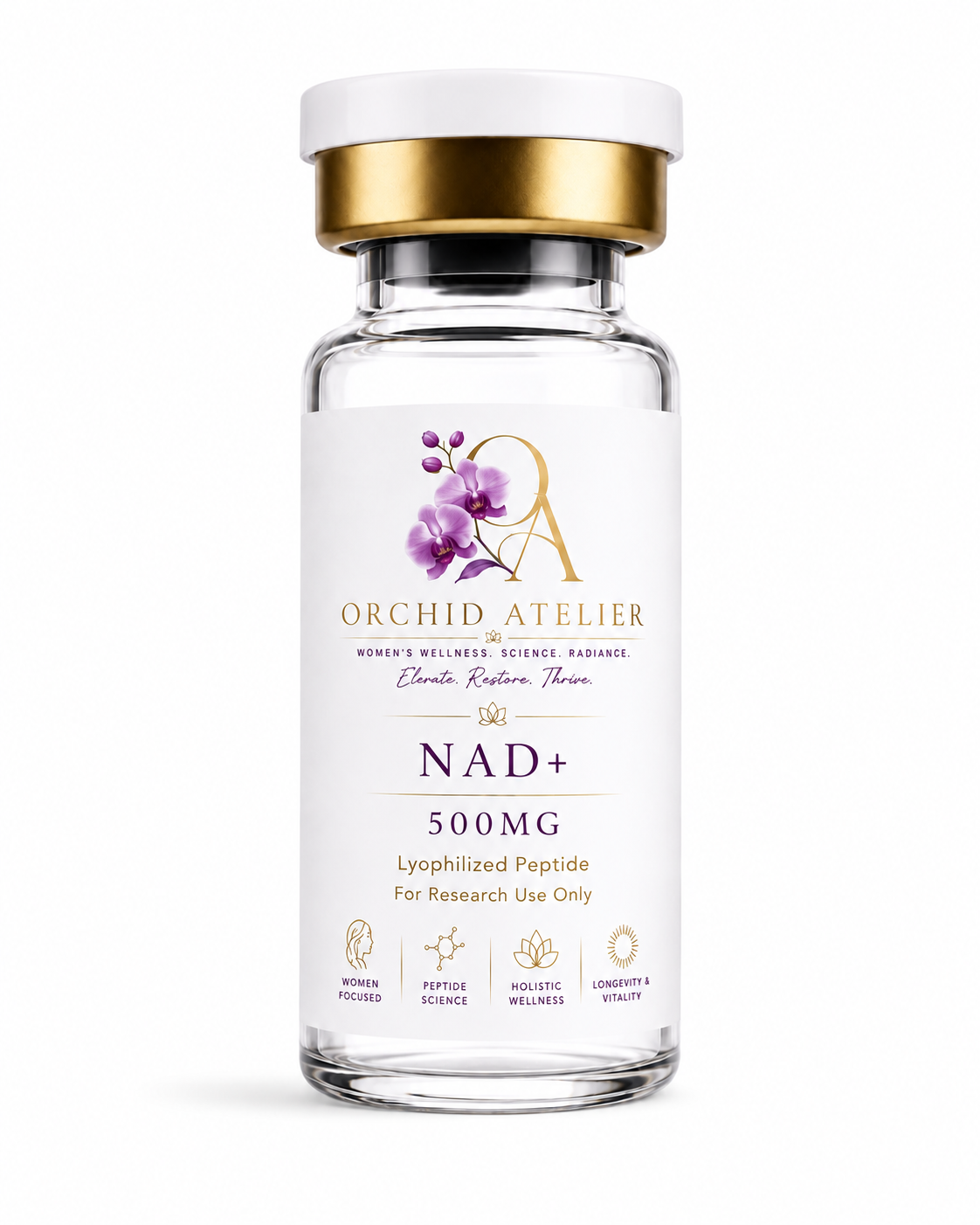
Description
// CELLULAR_POWER.INIT
NAD+ is not a peptide — it is a coenzyme present in every cell of your body. Discovered in 1906, this molecule sits at the center of the entire longevity conversation. Your mitochondria use it to generate ATP. Your PARP enzymes burn it to repair daily DNA damage. Your sirtuins depend on it to regulate aging-related gene expression.
// THE_DECLINE.LOG
Studies measuring NAD+ in human skin, muscle, and brain tissue all show the same pattern — levels fall sharply with age. By 40, you may be at ~70%. By 60, less than half what you started with. When NAD+ drops, three core systems slow down at the same time: energy production, DNA repair, and longevity pathways.
// RESEARCH_VECTORS
- Cellular Energy — Mitochondria use NAD+ to generate ATP, your body’s energy currency
- DNA Repair — PARP enzymes consume NAD+ to repair daily DNA damage in every cell
- Longevity Pathways — Sirtuins use NAD+ to regulate aging-related gene expression
- Age-Related Decline — Tissue levels may drop ~50% between age 40 and 60
// DIRECT_MOLECULE.FORMAT
Pure NAD+ is the end molecule — direct IV/injection delivery used in clinical research. This is the finished form, not a precursor like NMN (1 step away) or NR (2 steps away). Research-grade purity for laboratory investigation.
// PROTOCOL.REFERENCE
Dosing protocols vary by research context. Common study ranges: 100-500mg via subcutaneous injection. Consult published literature for specific methodologies. NAD+ is typically studied as a standalone compound or alongside sirtuin-activating compounds.
// RESEARCH USE ONLY. EDUCATIONAL CONTENT. NOT MEDICAL ADVICE.
Marcus T. (verified owner) –
Energy through the afternoon feels noticeably steadier — no mid-day crash like I used to get. Packaging arrived quick and discreet.
Jenna R. (verified owner) –
Took a couple weeks to really notice anything, but my recovery from morning workouts has felt smoother. Solid product so far.